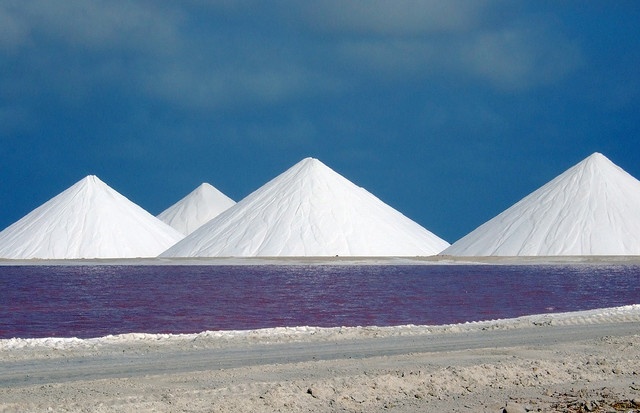
At Sahjanand Salt, Quality sea salt manufacturing is at the heart of our legacy.
Our sprawling Salt Pans in Kutch, India form the backbone of our robust Crystal Sea-Salt supply.
We are strategically located near ports of Mundra and Kandla in Kutch to ensure smooth supply chains in both domestic and international markets.
Sahjanand Salt’s quality is trusted by partners across industries; from Food Processing, Water-Treatment, and Pharmacueticals, to Textile Dyeing and De-Icing.
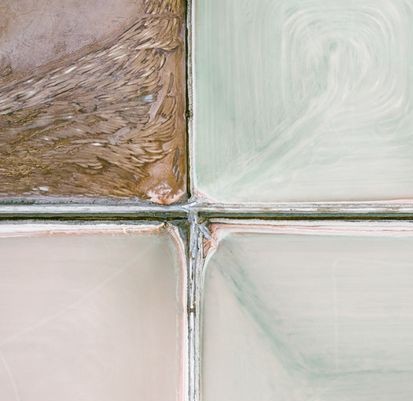
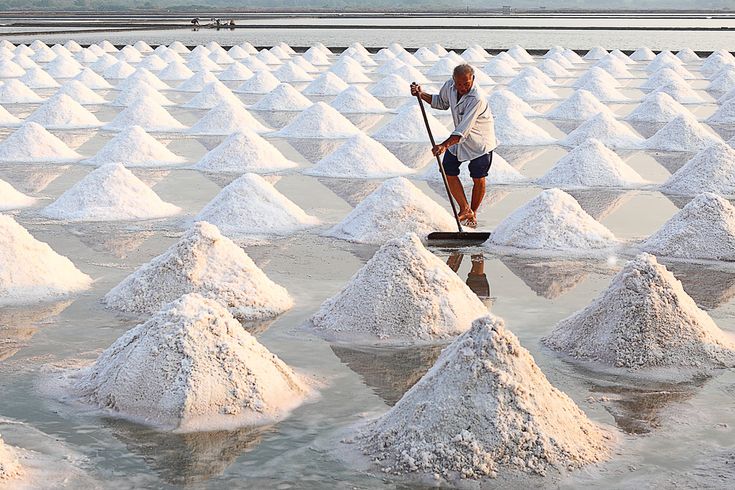
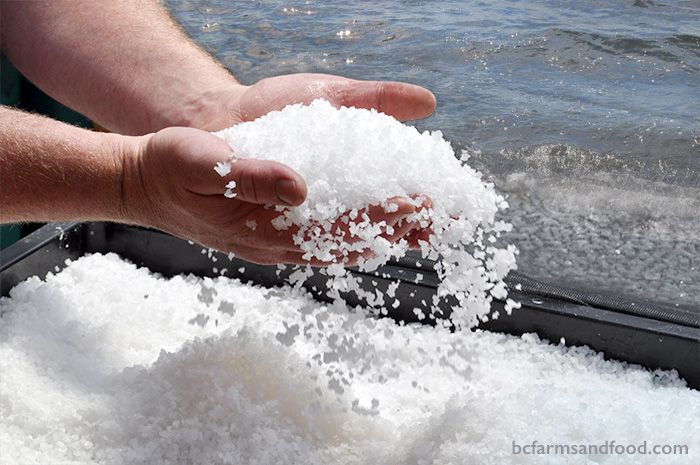
This is the most natural and sustainable method of salt production, ideal for the sun-drenched salt plains of Kutch, Gujarat. Firstly, we collect sea-water in large concentration ponds, where the Sun’s heat and wind gradually evaporate the water and leaving behind pure salt crystals. The final crystallization occurs in separate ponds where the saturated brine precipitates salt, and thus, we harvest the pure produce using modern mechanized tools.
This method is best for Crystal Sea Salt, White Salt, and Low Impurity Salt. It is a green, energy-efficient method, ideal for large-scale production.
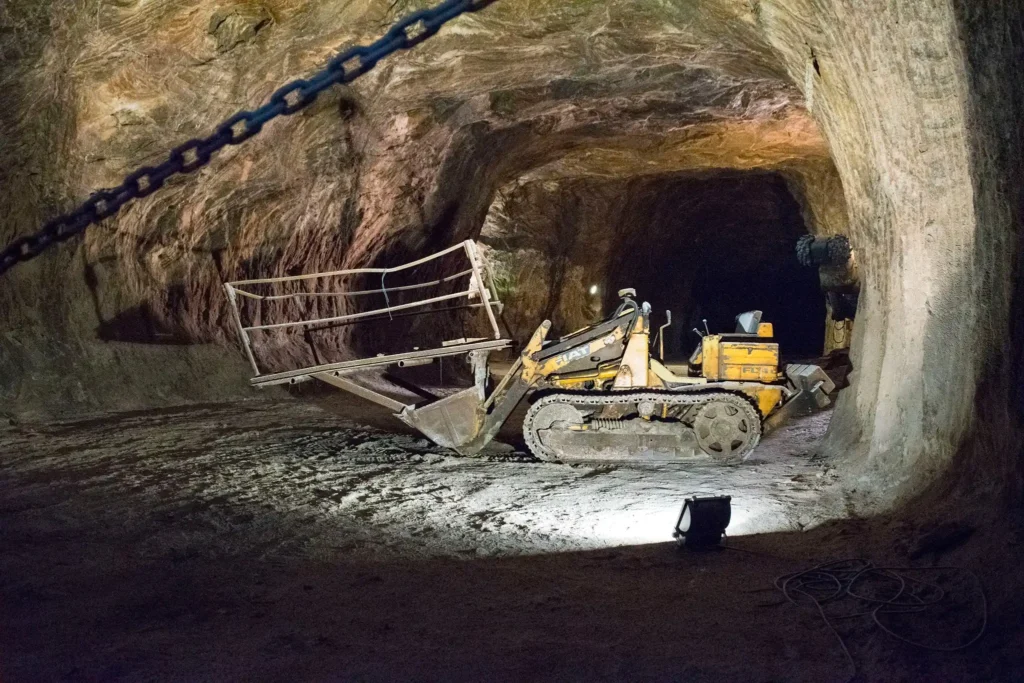
This is the second oldest method of salt production, and probably the most dramatic. Companies extract Rock-Salt from underground mines using room-and-pillar techniques. Though not currently practiced by us at Bajaj Group, it’s a globally recognized process, especially for bulk industrial salt in colder regions. Miners access salt beds through vertical shafts, and large machines blast and crush the salt for surface transport.
This method is used in Cold-weather regions like North America, and Pakistan because of their Geography!
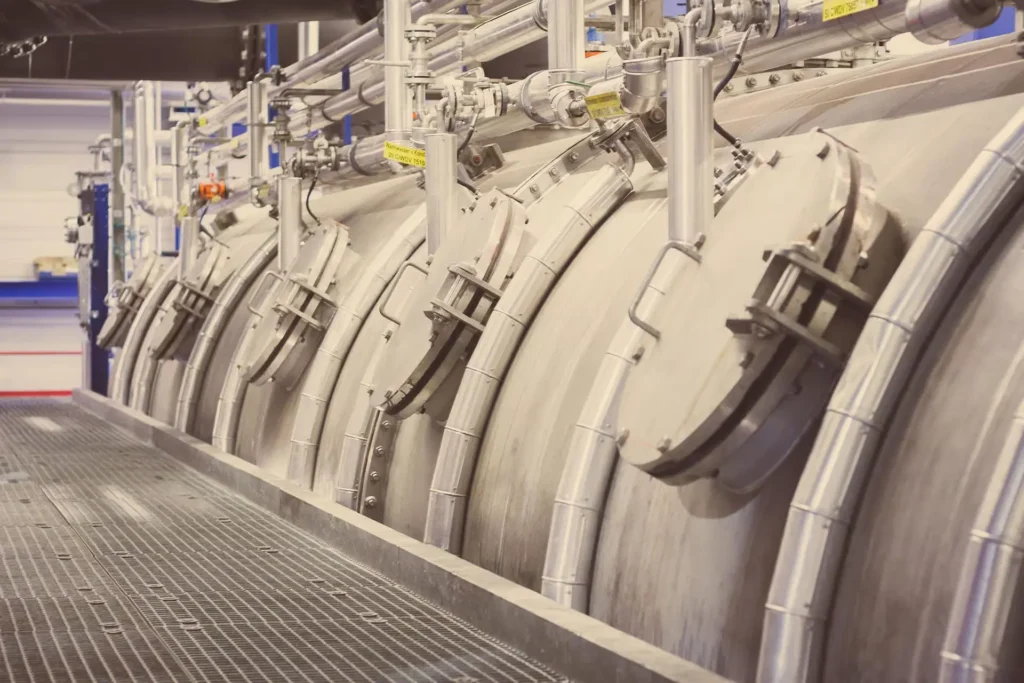
Perfect for producing ultra-pure, fine salt, this method uses solution mining and vacuum pans to extract salt from underground deposits. Water is injected to dissolve salt, forming brine, which is then boiled under vacuum in a series of energy-efficient chambers. This method produces high-quality food-grade and pharmaceutical salt.
This method is the best for producing Iodized Salt, Free-Flow Salt, and Vitamin-Enhanced Salt due to their high purity needs!
How do we makeSalt?
Intake & Conditioning
We draw sea-water into a network of canals and ponds, where it’s circulated till the optimal temperature and salinity for crystal growth is acheived.
1
We rest the water in evaporation ponds for 10 days. Subsequently, as the moisture escapes under the sun, the beds are ploughed to prevent hard crust formation.
Sun-Driven Evaporation
2
Faster Crystallization
Regular ploughing helps us break the frozen salt layers, accelerating salt crystal formation as a result, and boosting both purity and yield.
3
Harvest & Heaping
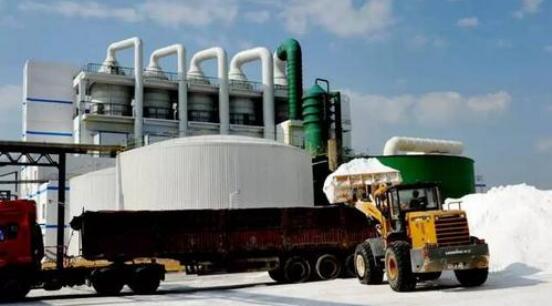
We harvest the salt crystals thus formed and either send them directly for processing in washing plants or stack them in large heaps for scheduled use.
4
Primary Screening
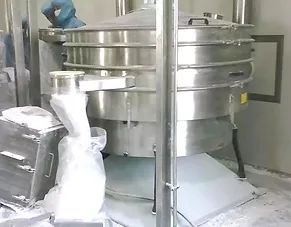
We drop the raw salt into a hopper and move it through a belt conveyor to a vibrating strainer to remove stones and other coarse impurities.
5
Slurry Formation
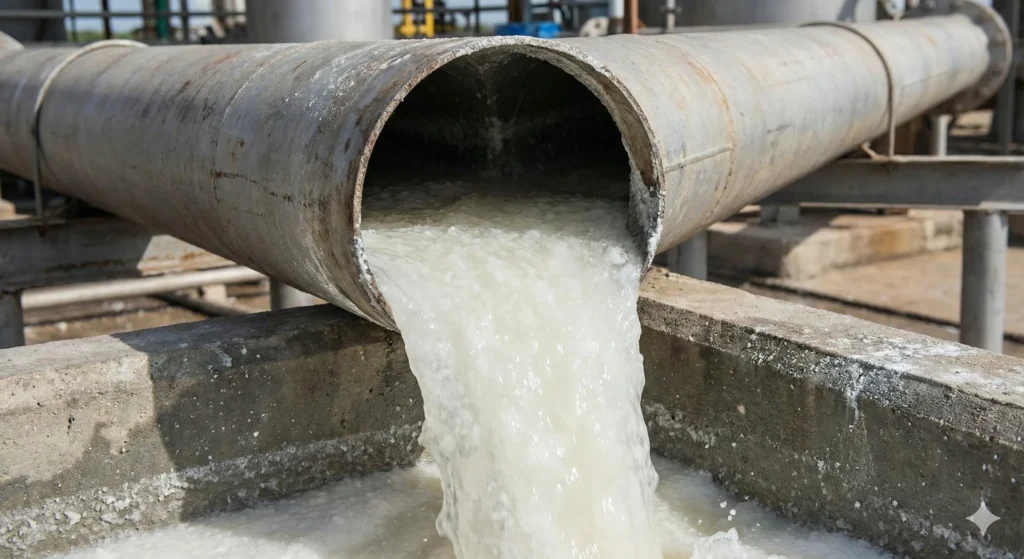
The screened salt enters a slurry tank, where we mix it with a blend of sweet and saline water to form a uniform brine paste ready for washing.
6
Brine Wash Treatment
The slurry passes through a line of screw conveyors, undergoing high-pressure brine sprays to wash away magnesium and calcium impurities, enhancing salinity.
7
Gravity Separation
While the salt moves upward, water flows downward, thus allowing us to drain away physical impurities and excess moisture through a natural gravity-based separation process.
8
Post-Wash Storage
Subsequently, We lift the washed salt is to an elevated platform via belt conveyors and store it in refined heaps, ready for final processing or packaging.
9
Quality Over Quantity
Eventhough 20% of volume may be lost in washing, this step ensures brighter, whiter, and higher-grade salt, which is perfect for food-grade and export quality uses especially.
10
💬
Your Salt SupplierTypically replies instantly
Hello! 👋 Need a quote or bulk pricing for Bajaj Salt? We're here to help!